Since 2025, several Dutch cities, including Amsterdam, Rotterdam, Utrecht, and Eindhoven, have implemented zero-emission zones. Only emission-free vans and trucks are permitted to drive there, and dozens more cities will follow suit in the coming years.
For companies that deliver daily in city centers, this fundamentally changes the reality. Access to the city is no longer a given. The question is not whether your operation needs to change, but when and how.
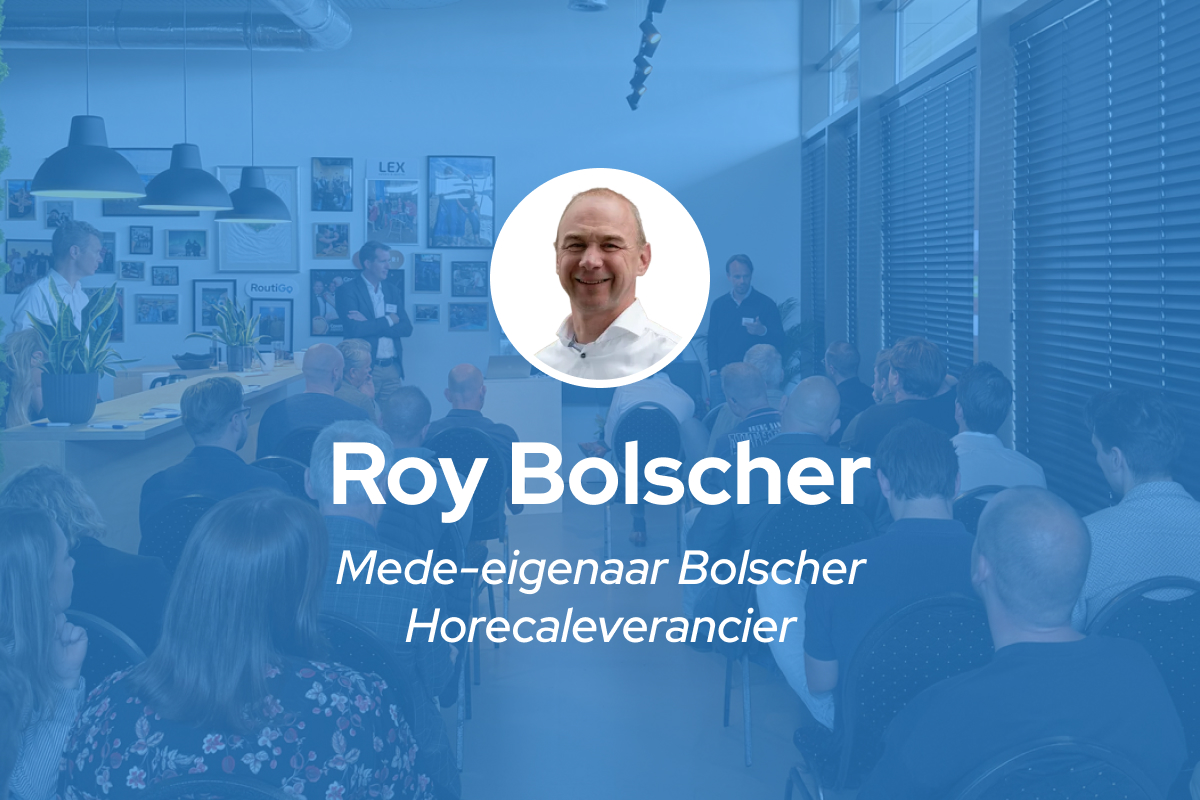
For hospitality supplier Bolscher, this transition began long before these regulations. Co-owner Roy Bolscher consciously opted for electric transport in 2015. Not because it was mandatory, but because he foresaw that the future of urban logistics would change.
During the Logistics & Delivery Lunch Event on March 19, he will share how that decision came about and what other organizations can learn from it.
Start before you have to
Bolscher's motivation was a clear ambition to structurally reduce the impact of their operations.
“In 2015, we had a plan to reduce CO₂ emissions by 50%. When we calculated our consumption, we quickly saw that replacing diesel with electricity would have a huge impact. That saves approximately 6 to 8 tons of CO₂ per year per van, and 3 to 4 tons per car.”
Instead of waiting for better vehicles or external pressure, Bolscher started immediately. The first step was taken with two electric cars and two electric vans. A conscious investment in the future of their distribution.
Obstacles disappear once you start
Electric driving was not yet standard practice at the time. Suitable vans were scarce, and the range was around 150 to 200 kilometers. There were also practical obstacles within the team, such as installing charging stations at employees' homes. The idea of a home charging station on the facade, in particular, initially met with resistance.
“It turned out that people's reluctance to have a home charging station was far from the truth. By offering them a small compensation for that ‘ugly thing on the wall,’ that quickly changed.”
With a small, practical solution, the resistance disappeared and Bolscher was able to take the next step in electrifying their distribution.
Electrification changes more than just your vehicles
The switch to electric driving impacted more than just the fleet. Positive changes also emerged in the warehouse and daily operations.
“Vans can now be parked indoors for loading and unloading. Refrigeration units can run more quietly because heat sources have been eliminated. And because routes have become shorter due to the limited range, there's actually more calm in the operation.”
What began as a necessary adjustment, also brought more structure and clarity to daily operations.
Change is only effective if you involve your organization
For Roy, the biggest lesson wasn't in the technology, but in how you introduce such a change within your organization. Electrification directly impacts daily routines, and that requires the involvement of the people who work with it every day.
“I started quite directively. That didn't work. Later, I asked employees to contribute ideas and gave them insight into energy consumption and impact. That's when understanding and engagement emerged.”
By actively involving employees and providing insight into the 'why' behind the change, buy-in was created. Sustainability thus became not an imposed measure, but a collective step forward.
The reality many companies now face
What began as a strategic choice for Bolscher in 2015 has now become a necessity for many companies. More and more cities are implementing zero-emission zones, and eventually, only emission-free vehicles will have access to these areas.
For organizations delivering in urban areas, this means that decisions regarding vehicles, planning, and operations directly determine whether you can continue to supply customers in the city.
The most important lesson Roy wants to impart to entrepreneurs who are still hesitant is clear:
“Just start. Don't wait until regulations force you, but take control yourself and build step-by-step towards an operation ready for the future.”
Hear live how Bolscher future-proofed his distribution
During the Logistics & Delivery Lunch Event on March 19, Roy will take you through the choices he has made since 2015 and what that specifically meant for his distribution. He will share how the switch to electric transport changed his routes, warehouse, and daily operations, what obstacles he encountered, and what practical benefits it yields today.
Do you want to hear his story yourself and discover what you can do today? Make sure you're there and reserve your spot for the Logistics & Delivery Lunch Event on March 19.





.jpg)