Our previous blog was about the importance of continuously going through the plan-do-check-act process. Devise what you're going to do, do it, then check if it went as planned, and if not: adjust your plan. In this blog, we zoom in on the first part of this process: planning. Also known as improvising 2.0.
Knowledge makes the difference
There are all sorts of ways to plan. People often plan based on experience. That's not wrong in itself, because experience is important. But the word 'experience' isn't in the Dictionary of Confusablesfor nothing. You have experience in something if you possess expertise or knowledge, not if you just have a feeling about something. The word 'knowledge' makes the difference. Because true planning is done based on knowledge, on facts, on experiences that you have recorded in systems.
‘If you don't plan, you're just messing around’
No matter how solid the plan, we now know – yes, from experience – that something in the schedule always changes the moment you set off in the morning. You might quickly be handed an extra package, or you receive a notification that someone on your route unexpectedly isn't home. And there's little point in driving somewhere if you know no one will answer. So, planning isn't static; it's dynamic, and you must accept that dynamism as a given. A wise man once told us: ‘If you don't plan, you're just messing around. If you do plan and have to adjust your schedule, then you're improvising.’ That's a truism. You can only improvise if you have a plan to work from. Otherwise, you're just messing around, and we don't like that.
199 tabs full of data
A while ago, we visited a large company. We won't mention names, of course, but believe us, you know the company. They had introduced a new, revolutionary planning system. The old planning system consisted of A4 paper that would be sorted around 2 AM. The new, revolutionary system was called… Excel! The only drawback? Only the guy who designed it knew how to make sense of the 199 tabs full of data.
By plane over the A1
If we look at the different phases of planning, we see that companies originally planned on paper. At some point, they switch to Excel, but they essentially do no more than copy the old paper-based method to Excel's digital 'paper'. The next phase is switching from Excel to a planning system. But even there, things often go wrong because people cling to existing workflows: the planning system is set up as if it were still about that stack of loose sheets of paper. This has everything to do with a form of maturity. You need to change your workflow. Otherwise, it's like navigating a plane above the highway from Amsterdam via the Antwerp Ring to Calais, and then via the A1 to Paris, only to conclude there that a plane is a worthless mode of transport.
Just quickly replan
If you switch to a planning solution, use it as a planning solution is intended. In the old situation, you would plan at 2 AM. If an extra package came in during the morning, it caused chaos. With a good planning system, you can just quickly replan. Of course, you need to consider the number of vehicles and the people you have, but you can quickly adjust the route planning. That's what you call improvising 2.0.
Want to know more?
In two weeks, we'll zoom in on the next phase: do. You'll drive and deliver packages, and in the meantime, you'll collect data to plan better next time. Want to know more now? Feel free to contact us via the contact form or call us at 030 – 7600 018.
Sparring about your ideal reception experience?
Thank you, your request has been received.
Oops! Something went wrong while submitting the form.
Why AI projects stall because of people, not technology
Anick Quee - De Buijzer
Why do some organizations succeed in extracting value from AI while others fail? Josje van Beek explores what really happens when AI projects stall, showing that the solution rarely lies in the technology itself.
From static to dynamic. How Fruitful Office shares control with AI
Patrick Okkersen
What happens when you let go of years of logistical habits? Sietze de Wit shares how Fruitful Office made the switch from fixed routes and drivers to AI-supported dynamic planning.
A missed delivery isn't just a planning error; it's a missed appointment.
Anick Quee - De Buijzer
A missed delivery isn't a planning error, it's a missed appointment. Give recipients real-time control to reschedule, redirect, or transfer, and prevent failed attempts before they happen.
Why urban distribution often fails in the last mile
Patrick Okkersen
The biggest challenge in urban distribution is often in the last few meters. Ahead of his session at the Logistics & Delivery Lunch Event, Melle Sprenger explains why deliveries get stuck there and how technology can help drivers.
Urban logistics is changing. How Bolscher future-proofed his distribution
Anick Quee - De Buijzer
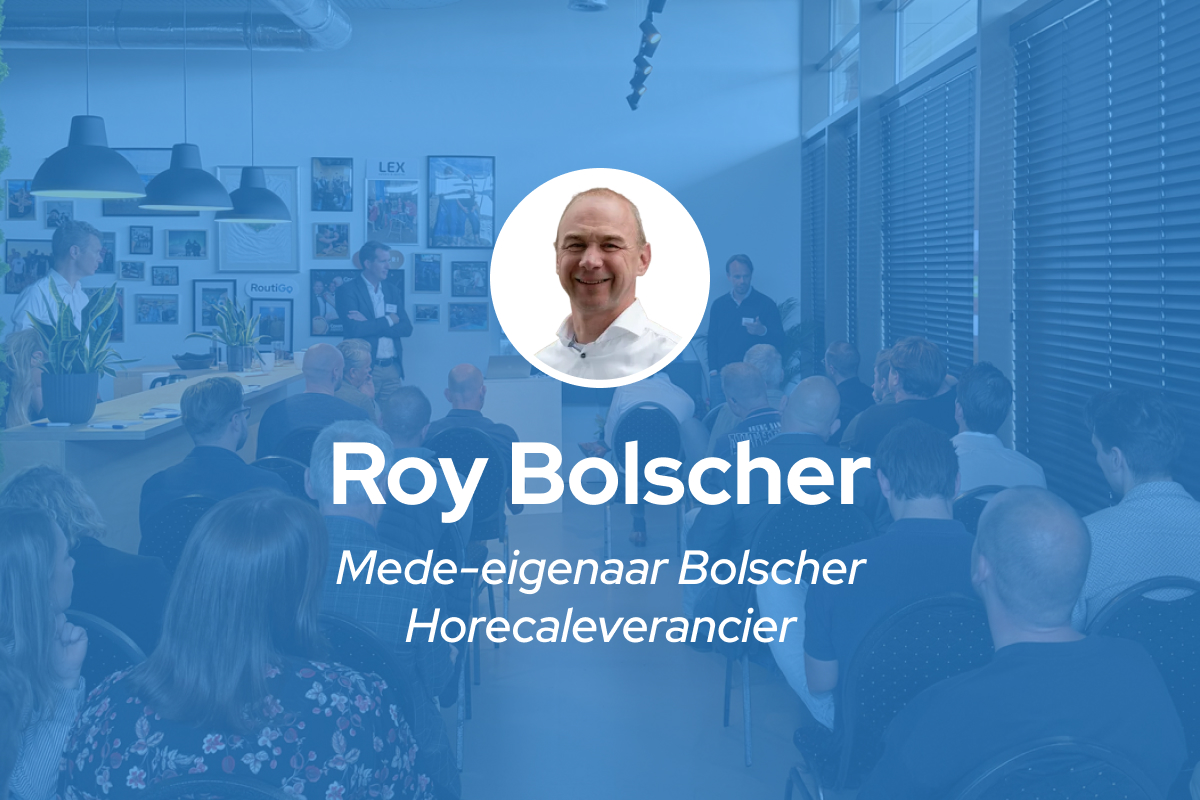
Urban logistics is changing rapidly. Leading up to the Logistics & Delivery Lunch Event, speaker Roy Bolscher offers a brief preview in this blog of his keynote on how he future-proofed his distribution.
Cities are getting crowded. How do we keep urban logistics moving?
Patrick Okkersen
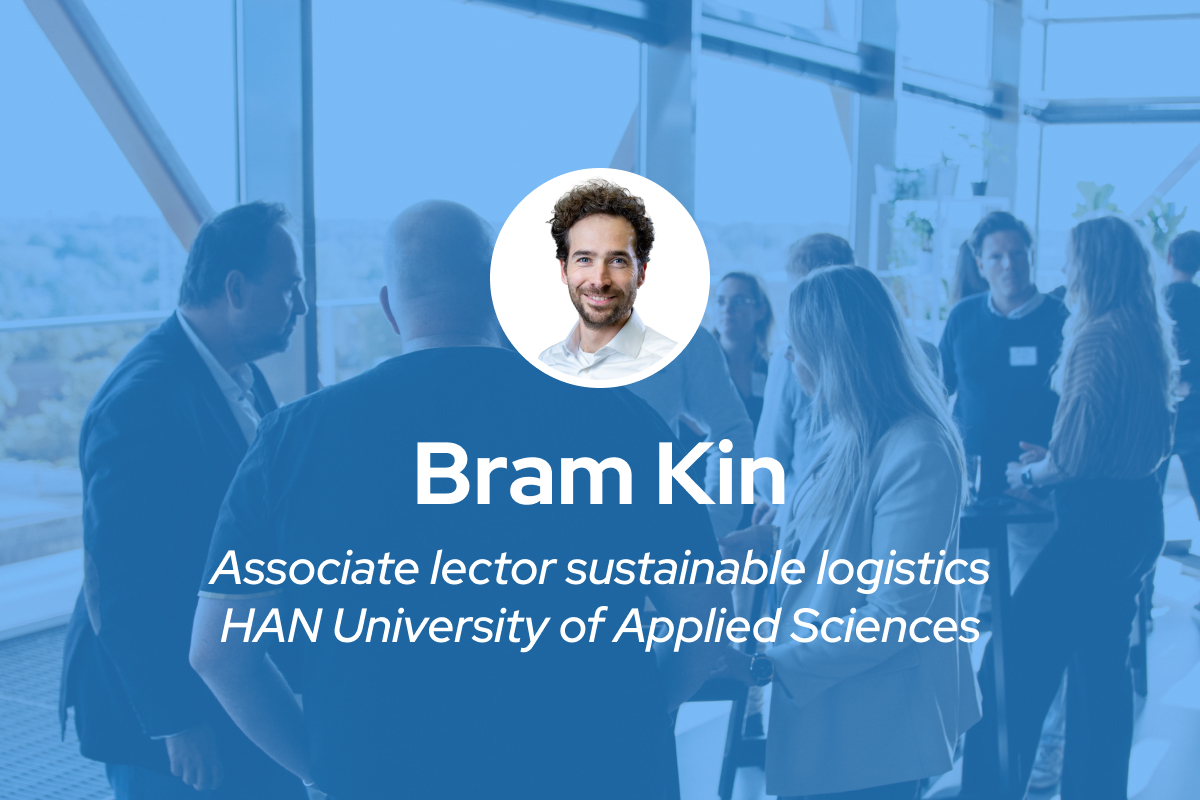
Cities are becoming more crowded and logistical pressure is increasing. Leading up to the Logistics & Delivery Lunch Event, Bram Kin, associate lecturer at HAN University, shares his insights on what this means for organizations in the city.
Why Digital Transformation Only Works If You Keep It Human
Anick Quee - De Buijzer
Digital transformation often revolves around technology, but Patrick Okkersen shows progress happens when AI, leadership, and humanity converge. What does this mean for building software that truly transforms organizations?
Control, growth, and progress: the RoutiGo approach behind Crisp’s success
Patrick Okkersen
For years, Crisp worked with RoutiGo on a delivery operation that adapted to growth, peak periods, and new markets. What started as route planning evolved into a strategic partnership that provided control, flexibility, and scalability.
RoutiGo on the ultimate customer experience: “The next step is the driver who, with the right tools, completes the experience”
Patrick Okkersen
The next step in last-mile delivery? It's not just about tight time windows, but about empowering drivers with the right tools to complete the experience.
PLUS Retail on the ultimate customer experience: “Every interaction is an opportunity to make all the difference”
Anick Quee - De Buijzer
At PLUS Retail, every interaction counts. During the Logistics & Delivery Lunch Event, Maurice Buring and Arvid Nieuwsma will explain how they combine customer-centricity and technology to achieve the ultimate customer experience.
Smarter delivery starts with control over your operation
Patrick Okkersen
The delivery world is changing rapidly. Customers expect clarity and speed while you maintain operational control. Read how RoutiGo helps delivery companies with smart, scalable software—from efficient routes to real-time tracking solutions.
AI in delivery logistics: hype or opportunity? Melle Sprenger, CTO of RoutiGo, shares his vision on how AI truly adds value to route planning and customer communication. Read more and discover the future of AI in logistics!
Discover how AI is changing the future of logistics and delivery
Patrick Okkersen
AI in logistics: hype or opportunity? On April 10, 2025, Jasper Wognum reveals how to smartly deploy AI for efficient delivery. Read our interview on how he breaks down misconceptions and strategically uses AI for real impact in logistics.
What are zero-emission zones and what do they mean for the logistics sector?
Anick Quee - De Buijzer
Zero-emission zones have been a reality in 14 Dutch municipalities since January 1st – what does this mean for your logistics? Discover the impact on your fleet, infrastructure, and costs, and how to respond smartly.
The future of logistics: How RoutiGo helps you stay ahead
Patrick Okkersen
Zero-emission zones, digitalization, and sustainability are transforming the logistics sector. With RoutiGo, you optimize routes, leverage AI, and make sustainability visible. Discover how we're preparing your logistics for 2025 and beyond!




.jpg)